🚽 Toilet Cleaning Robot
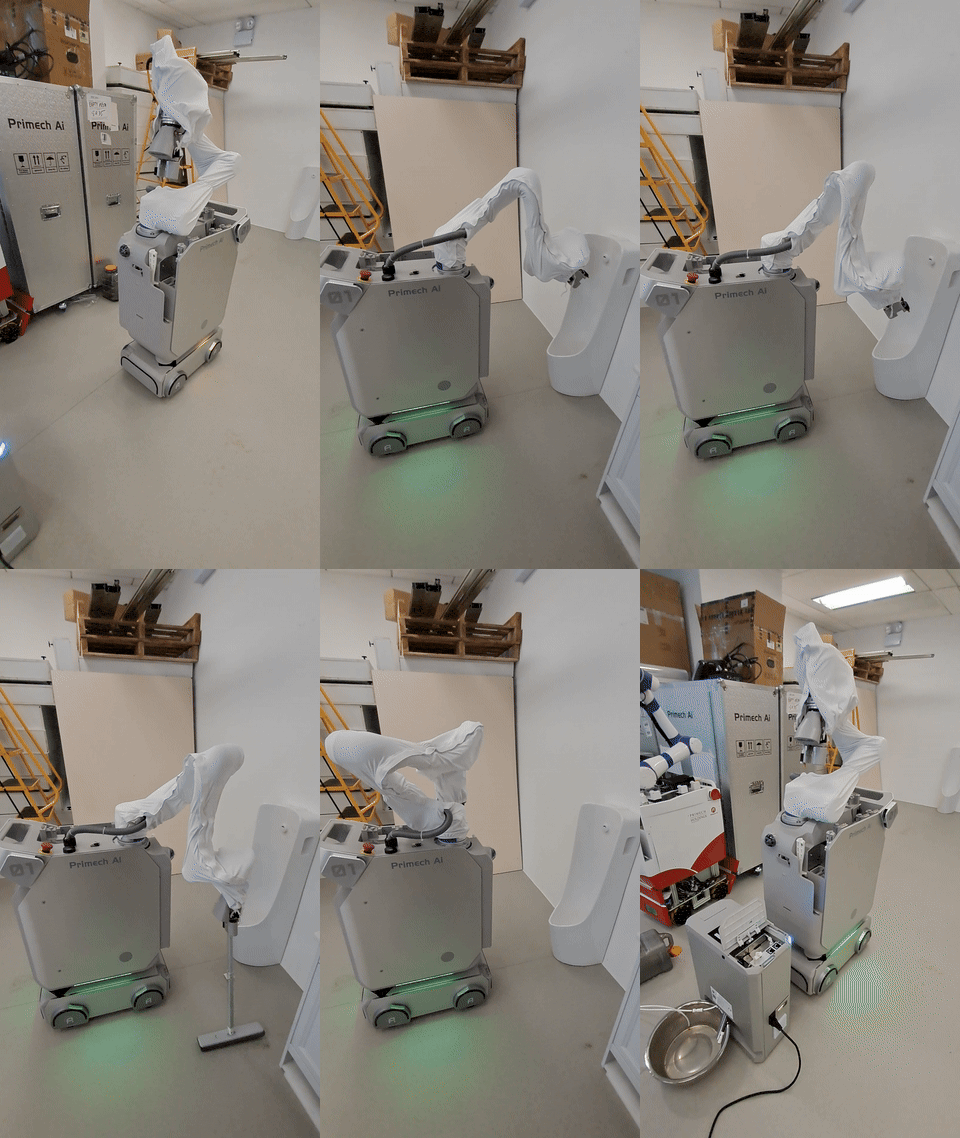
Nobody wants to clean public toilets, so let a robot do it. Hytron is an autonomous toilet cleaning robot. It drives itself to a toilet, urinal or sink, lines up in front of it, and gets to work: spraying water, scrubbing with two different kinds of brushes, and also wiping the floor.
🤖 How It Works
Cleaning happens in three steps:
- Get close. The robot uses 2D navigation to drive roughly to the goal location.
- Line up precisely. A YOLO object detector finds the fixture, and two laser distance sensors fine-tune the robot's position in front of it.
- Clean. The robot arm runs its cleaning routine: spray, brush, wipe.
Step 2 matters more than it looks. The arm motions are pre-recorded rather than adapting to the environment, so if the robot is parked a few centimeters off, the brush will press to hard on the surface or ever collide. Accurate docking is what makes everything after it work.
🛠️ Technology Stack
- ROS/ROS2 (Robot Operating System)
- C++, Python
- SLAM, Navigation Stack
- ros_control
- Gazebo Simulation
- Open-RMF
⚡ The Challenge: Legacy Code
However the dirty job still needed to be done by myself, the codebase cleanup.
Despite being a robotics project, the legacy code barely used ROS. The depth camera driver was the only ROS2 node; everything else was a pure Python prototype. Here's what I was dealing with:
- Magic numbers everywhere, with no hint of where they came from
- Variable names like
vandp, it gets better likevv. What's the difference between v and vv? - Business logic as a hand-drafted state machine made of dozens of nested
if/elsestatements
Just reading the code, I couldn't make sense of even the simplest function. AI to the rescue: it helped me work out what the code was actually doing. Without it, it would have taken months to just make a simple change.
From there I refactored step by step. Every part I touched became a small, isolated ROS2 node with one clear job. The book Clean Code was a great guide for untangling the spaghetti.
🙋 My Contributions
⚙️ Servo Motor Control
I connected the servo motors through ros2 CANopen, so they can be controlled through standard ROS2 interfaces.
🗺️ Fleet Management with Open-RMF
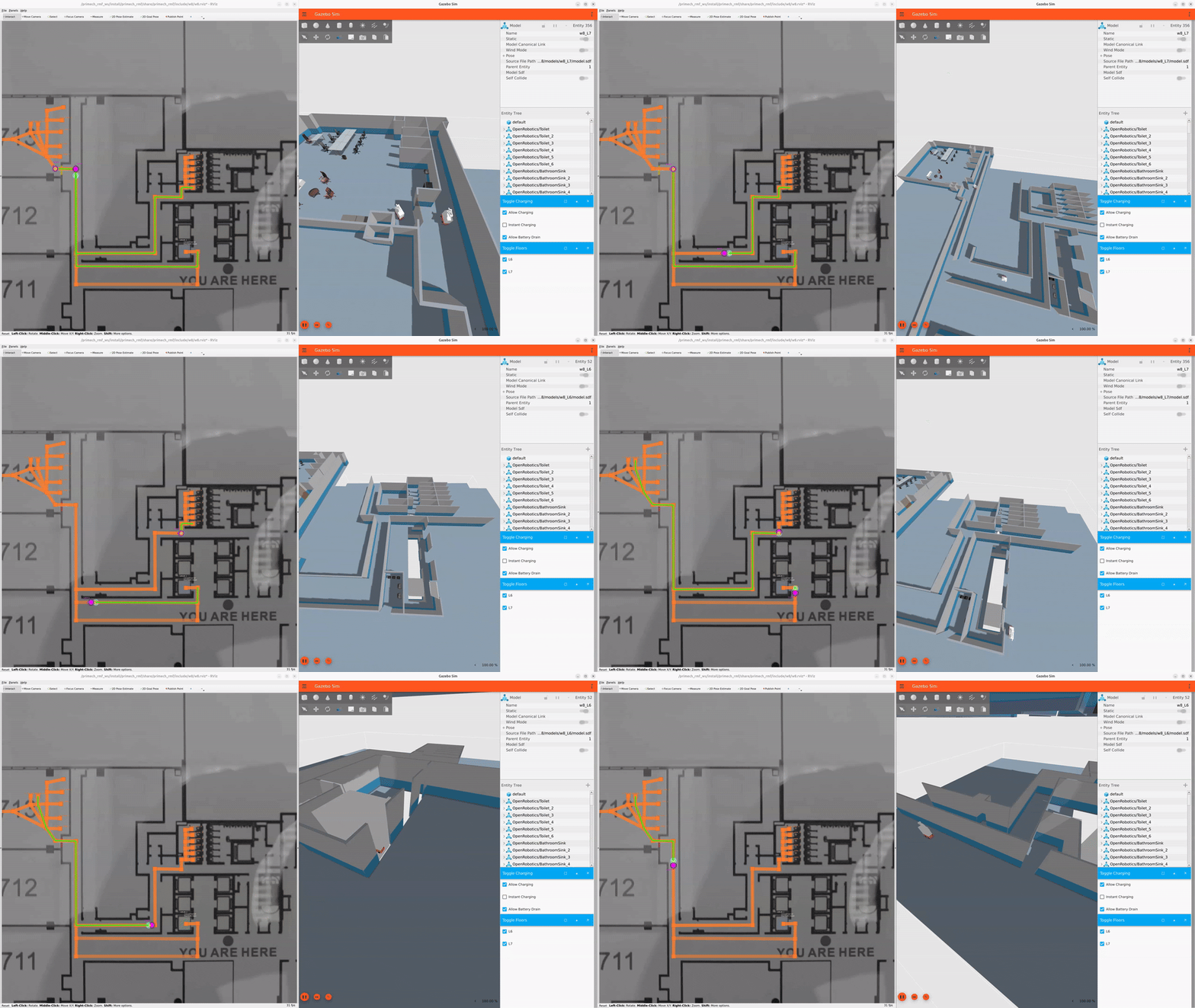
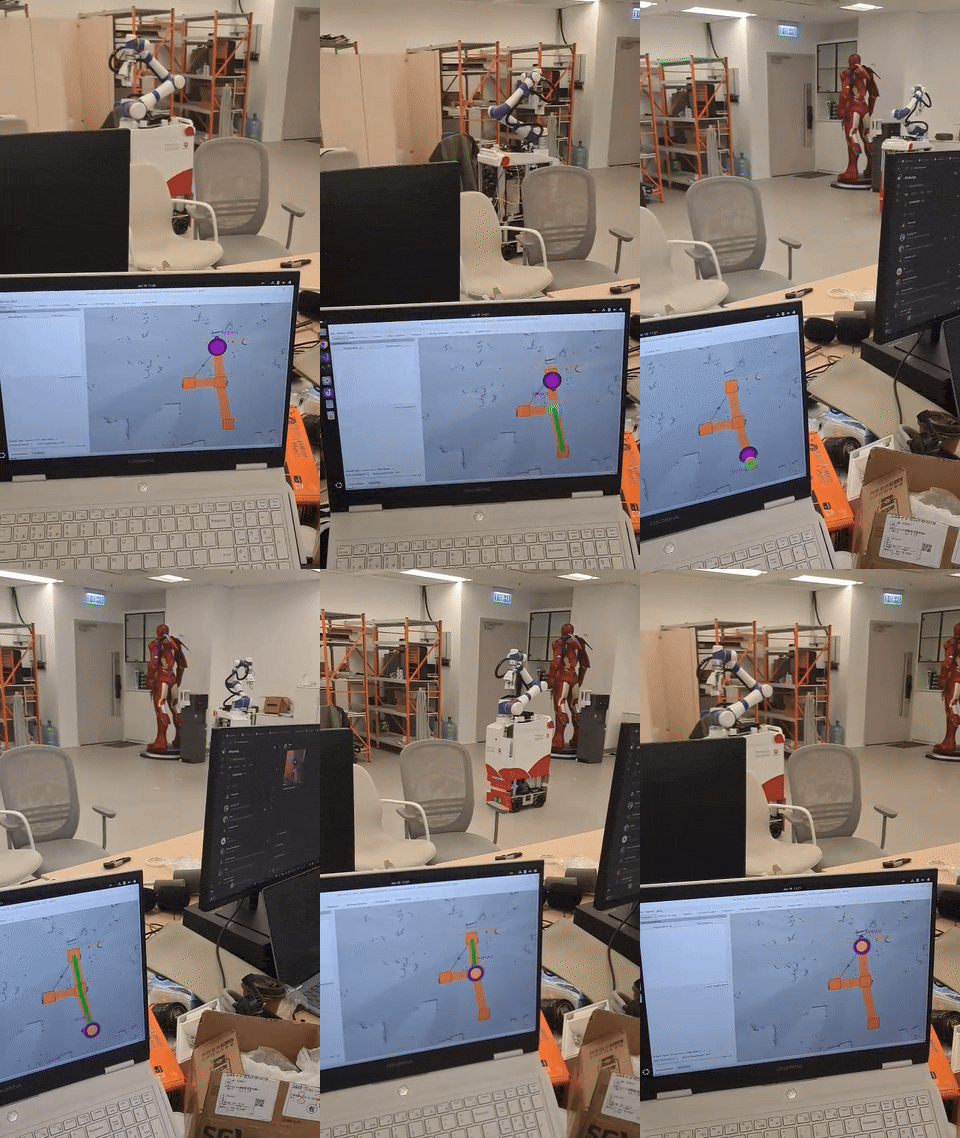
I built an Open-RMF bridge so the robot can be dispatched and monitored from a fleet management platform alongside other robots. Here it is in Gazebo simulation and in the Open-RMF dashboard:
👁️ Fixture Detection with YOLO
I trained a YOLO model to detect toilets, urinals and sinks. Its detections tell the robot where to dock in front of each fixture.
📚 Lessons Learned
- Naming is not a detail. After weeks of puzzling over
vandp, I now pay extra attention to variable and function names. Code is read far more often than it's written. - Refactor in small pieces. Turning one part at a time into an isolated ROS2 node kept the robot working while the codebase got better.
- Everything needs unittest I started setting up automated testing on the gitlab server for each codebase I touched. That made me more confident on making bigger and bigger edits.